A water main breaks under a parking lot. A new service line has to cross a concrete driveway. A section of sidewalk has heaved and needs to come out. A storm drain inlet needs replacing. Each job starts with getting through concrete or asphalt, and how that first cut is made decides how much patching there is at the end.
That's what slab sawing is for. Here's how it works on utility and repair jobs, and what to sort out before the saw shows up.
What Slab Sawing Is
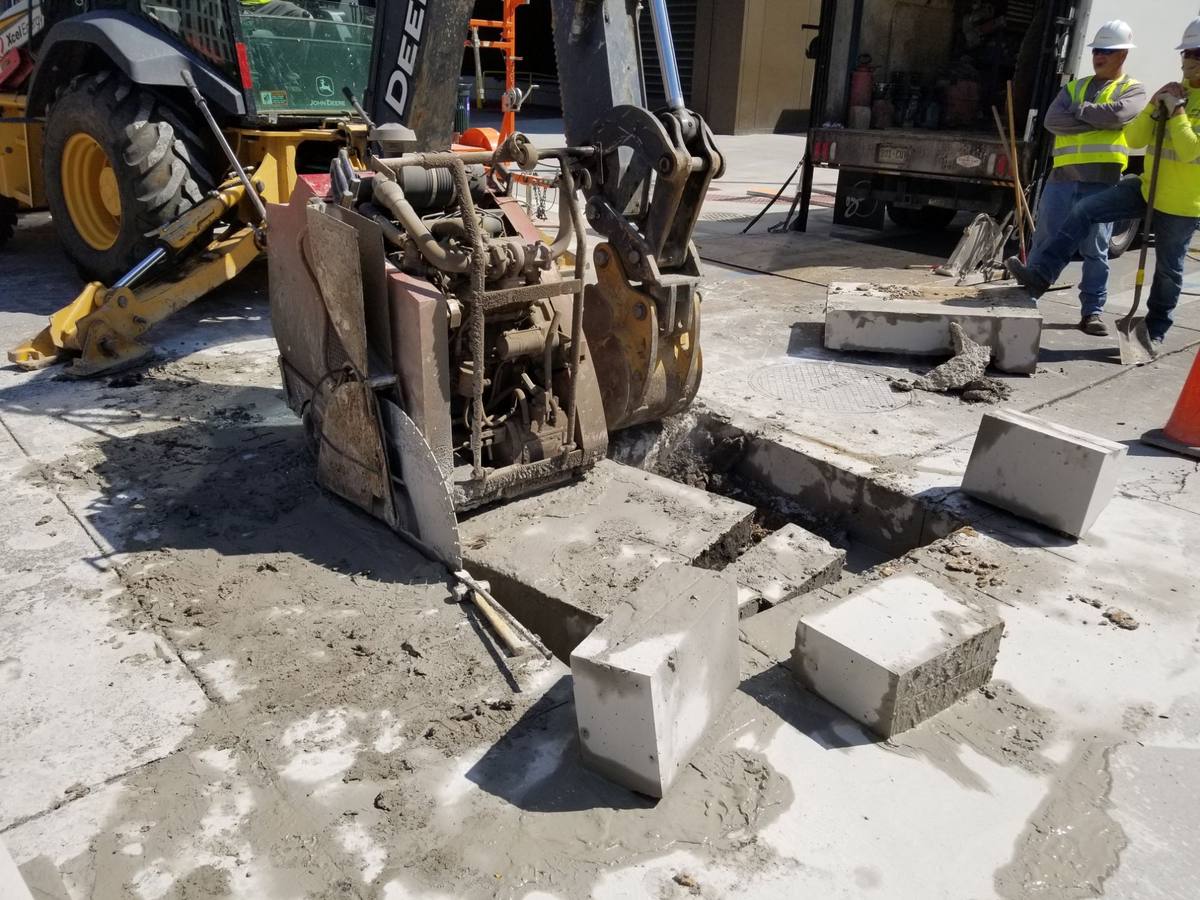
A slab saw, also called a flat saw or walk-behind saw, is a large diamond blade on a wheeled frame. The operator walks it along a marked line, and the blade cuts straight down into a horizontal surface: a floor slab, a driveway, a parking lot, a street or a bridge deck. Water runs onto the blade to keep it cool and hold down the dust.
The saw sets the depth of the cut, and bigger blades go deeper. Diamond blades cut through rebar and wire mesh along with the concrete, so steel in the slab doesn't stop the job. Most slab saws run on gas or diesel, which makes them the right tool outdoors. Indoors, where exhaust is a problem, the job usually goes to an electric saw instead.
Why Utility and Repair Work Starts With a Saw
You can break up concrete with a jackhammer or a breaker on an excavator, and sometimes that's the right call. But breaking concrete doesn't stop where you want it to. Cracks run past the line, edges crumble, and a patch that should have been three feet wide ends up five. On a street, a sidewalk or a finished floor, that means more concrete to replace, more asphalt to patch and a repair that looks like one.
A saw cut gives you a clean, straight edge on both sides of the opening. The concrete you're keeping stays whole, and the patch has a square edge to butt up against.
Common Utility and Repair Jobs
- Utility trenches. Two parallel cuts down a street, lot or slab so a crew can dig down to water, sewer, gas or electrical lines, then a clean edge to pave back to.
- Water and sewer repairs. A square opening over a broken line, cut just big enough to dig and make the repair.
- Vault and manhole access. Opening a slab over a buried vault, valve or junction box, or cutting around a structure that's being raised or replaced.
- Sidewalk, curb and driveway sections. Cutting out damaged or heaved panels so only the bad sections get replaced.
- Pavement patches. Squaring up the edges around a pothole or failed section of concrete or asphalt before it's patched.
- Slab removal in sections. Cutting a slab into pieces small enough for equipment to lift out and haul off, instead of breaking it in place.
What to Sort Out Before the Saw Shows Up
- Call 811 and get the lines marked. Anywhere you're cutting into the ground surface, have the underground utilities located first. A saw blade going through a slab can reach a shallow line or conduit sitting right under it.
- Know what's inside the slab. Indoors or on structured decks, slabs can carry conduit, plumbing and, in some buildings, post-tension cables. If you have plans, pull them out. On commercial jobs the area is often scanned before anyone cuts.
- Mark the cut lines. Paint or chalk the lines for the opening. If you don't know how thick the slab is, tell the crew.
- Check on permits and traffic control. Cutting in a street, alley or public sidewalk usually means a right-of-way permit, and often a traffic control plan. The rules differ from city to city, so check with the city where the job is before it's scheduled.
- Plan for the slurry. The water from the blade comes off gray and gritty. Keep it out of storm drains, which many cities regulate, and plan on vacuuming or containing it.
- Plan the removal. Decide who's lifting the cut sections out and hauling them off, and how big the pieces can be for the equipment you'll have on site.
What the Crew Needs on Site
- Water. The blade runs wet. A hydrant, spigot or water tank nearby keeps the cut moving.
- Access. The saw has to get to the cut and walk the full length of each line, so clear vehicles, materials and anything else out of the way.
- A clear work zone. On a street or parking lot, cones, barricades or flaggers have to be in place before cutting starts.
Questions Worth Asking
- Can your saw reach the full depth of this slab in one pass?
- Do you need the slab scanned or the lines marked before you cut?
- How will you handle the water and slurry?
- How big should the sections be for the equipment pulling them out?
A crew that does utility work will usually ask these first.
Talk It Through With Us
Spitellie Concrete Sawing is a family-run concrete sawing and core drilling company in Wheat Ridge, started in 1980 by Michael Spitellie's mother and father. Most of our work is commercial and utility, and we also work for contractors, subcontractors and homeowners. We do slab sawing, electric sawing, wall sawing, hand sawing and core drilling, and we hold a Right-of-Way contractor license with the City of Aurora. If you've got a trench, a repair or a section of slab that needs to come out, give us a call or send the job details, and we'll tell you what the job needs.