Sooner or later, almost every building project needs a pipe, a wire or a duct to pass through concrete that's already there. A floor slab, a foundation wall, a parking deck, a vault. You can't hammer a clean hole through that without cracking the concrete around it, and a regular masonry bit won't go big enough or deep enough. That's the job core drilling was made for.
Here's what core drilling is, when it's the right tool, and what to have sorted out before anyone starts drilling.
What Core Drilling Is
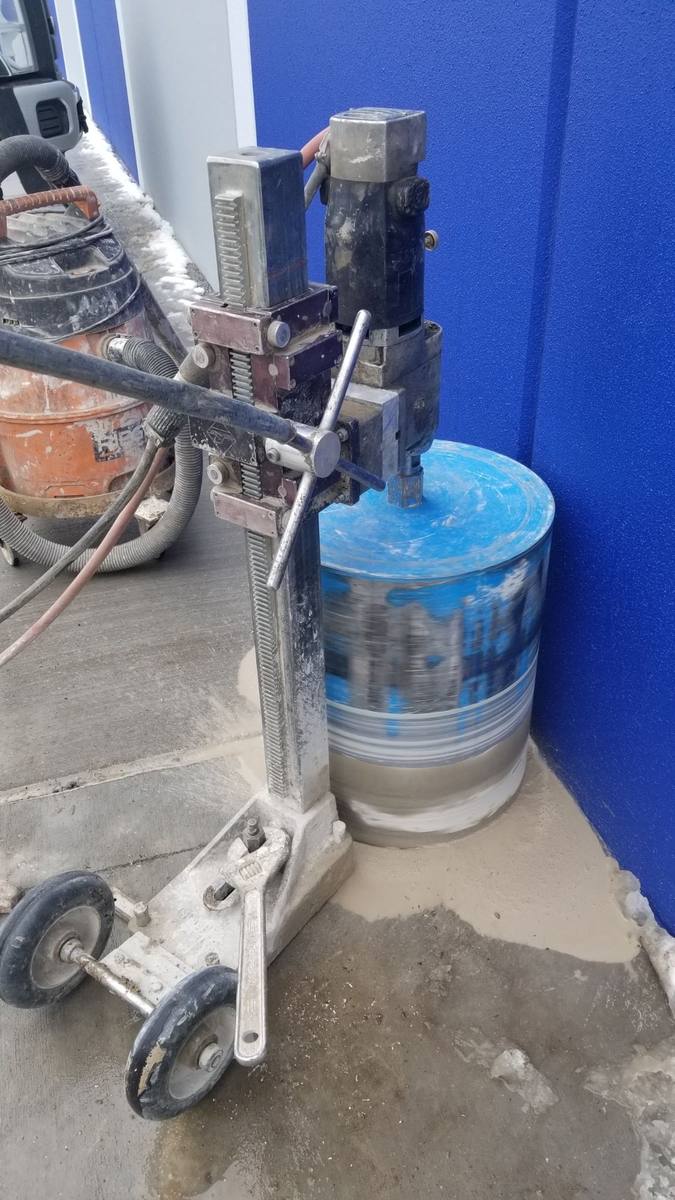
A core drill uses a hollow steel bit with diamond segments around the rim. The bit spins and grinds a ring into the concrete, and when it breaks through, the middle comes out as a solid cylinder called a core. What's left behind is a smooth, round hole with clean edges.
The drill sits on a rig that's anchored or held tight to the surface, so the bit goes in straight and stays put. Water runs through the bit while it cuts to cool the diamonds and keep the dust down. Because the rig mounts to the concrete, a core drill can work down into a floor, sideways into a wall, or up into a ceiling.
Diamond bits cut through rebar as well as concrete, so steel inside the wall or slab doesn't stop the job. Whether it's okay to cut that steel is a different question, and we'll get to it below.
When You Need It
If the opening is round, core drilling is usually the answer. Common jobs include:
- Plumbing penetrations. Drain, waste and supply lines through floors and foundation walls.
- Electrical and conduit runs. Getting power or data from one side of a wall or floor to the other.
- HVAC lines and vents. Refrigerant lines, condensate lines, exhaust and duct runs.
- Utility work. Pipe and conduit entries into vaults, manholes and other precast or poured structures.
- Anchor and rail holes. Holes for posts, railings and anchor bolts that need to be set into existing concrete.
- Test samples. Engineers sometimes pull cores to see what a slab is made of and how thick it really is.
Core drilling also shows up as part of bigger cutting jobs. A row of overlapping cores can rough out an opening where a saw can't reach, and holes drilled through a slab section can give a crew lifting points to pull it out.
Core Drilling or Sawing?
The short version: round holes are core drilling, straight-edged openings are sawing. A doorway, a window, a trench or a square duct opening gets cut with a wall saw, slab saw or hand saw. A pipe or conduit penetration gets cored. Some jobs need both. We go into the difference in more detail in How to Cut a Hole in a Concrete Wall: Wall Sawing or Core Drilling?
What to Know Before You Drill
A core hole is small, but it goes all the way through, so it's worth a few minutes of planning first.
- Know what's inside the concrete. Slabs and walls can carry conduit, plumbing, rebar and, in some buildings, post-tension cables. Hitting a tensioned cable is dangerous and expensive. If you have building plans, pull them out. On commercial jobs the GC will often have the area scanned before anyone drills.
- Ask whether the rebar can be cut. One hole through a non-structural slab is rarely a concern. Several large holes close together, or holes through beams, columns or structural walls, can be. If you're not sure, that's a question for a structural engineer before the job, not after.
- Check what's on the other side. When the bit breaks through, the core and the water come with it. Make sure nobody is standing under a floor that's being drilled and that the room below is protected.
- Check on permits. Whether a penetration needs a permit, and what sealing or fire-stopping the finished hole needs, depends on your city and the building. Check with your city's building department before the job is scheduled.
- Have the sizes and locations ready. Know the diameter each hole needs to be, how many there are, what they go through and where they go. Mark the centers if you can.
What the Crew Needs on Site
Core drilling is a tidier job than most concrete cutting, but it still needs a few things:
- Water. The bit runs wet, so the crew usually needs a water source nearby, like a spigot or a utility sink.
- Power. Most core drills are electric, so plan on an outlet or a generator.
- Room to set up. The rig needs space around the hole location, and enough clearance to pull the bit and the core back out.
- A plan for the slurry. The cooling water comes out gray and gritty. Indoors, nearby floors and walls should be protected. Outdoors, keep it out of storm drains, which many cities regulate.
Questions Worth Asking
- Can you drill the hole sizes I need, through this thickness?
- Do I need a scan before you drill?
- How will you handle the water and slurry, especially on an upper floor?
- Who removes the cores and cleans up?
A good crew will have straight answers. If they don't ask what's inside the concrete, ask them why not.
Talk It Through With Us
Spitellie Concrete Sawing is a family-run concrete sawing and core drilling company in Wheat Ridge, started in 1980 by Michael Spitellie's mother and father. We do slab sawing, electric sawing, wall sawing, hand sawing and core drilling for commercial and utility work, contractors, subcontractors and homeowners. If you've got holes that need to go through concrete, give us a call or send the job details, and we'll tell you what the job needs.